Installing an EV charger in a townhouse with a shared wall
An EV charger circuit in a townhouse usually runs entirely on your own side of the shared wall, without touching it. Only conduit that actually crosses the fire-rated common wall needs a tested penetration firestop system matching the wall's own 1-hour or 2-hour rating -- a model-code rule as of 2026 that your state's adopted edition may amend.
Updated 2026-09-02
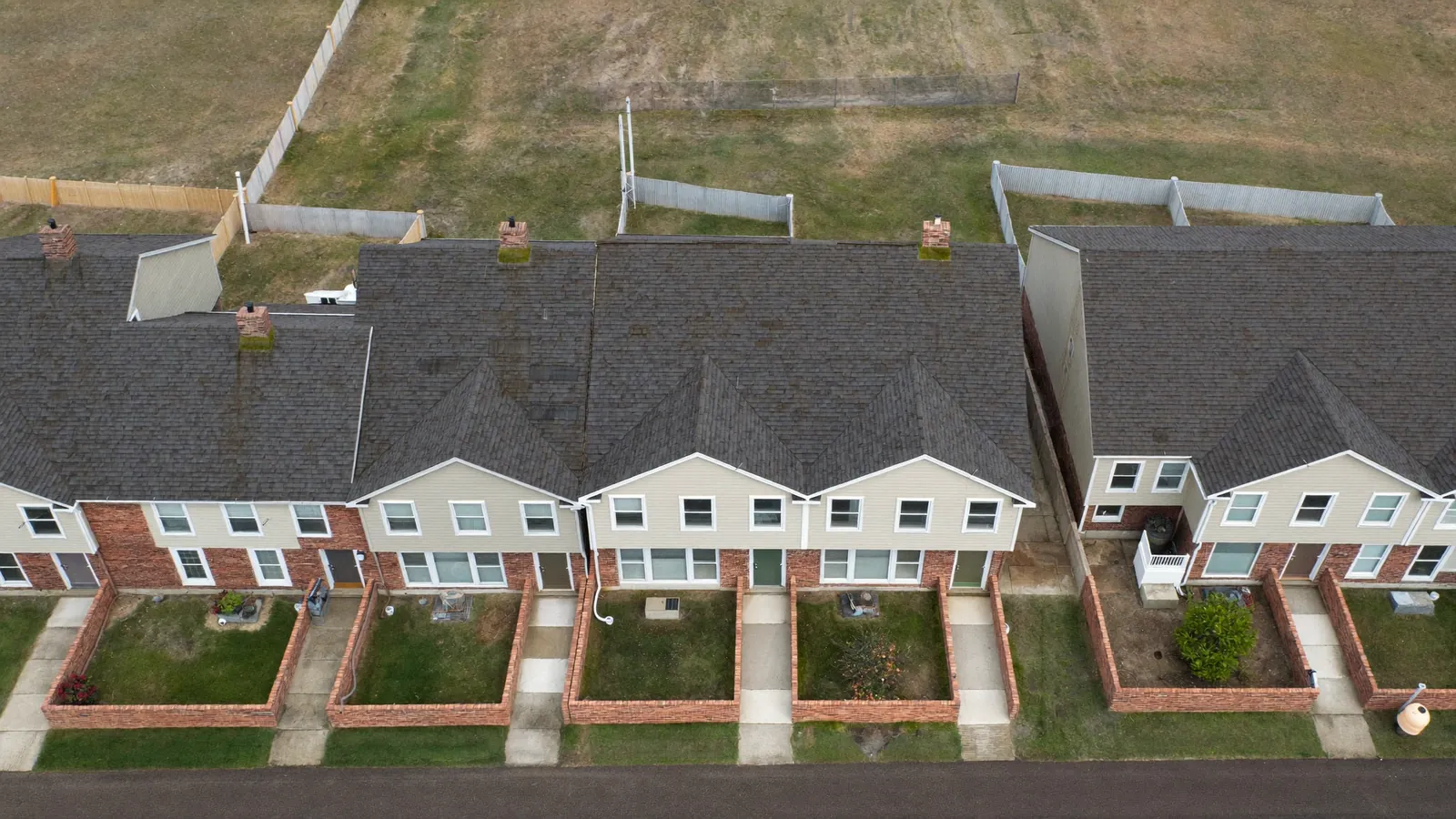
Does an EV charger circuit have to cross the shared wall in a townhouse?
No, not in the typical case. Most townhouse EV charger installs run a circuit from the unit's own panel to a garage, driveway or exterior wall that belongs entirely to that unit, without the conductors ever entering the cavity of the wall shared with the neighboring unit. That is the simplest and cheapest install, and it avoids the fire-separation question entirely.
The wall only becomes relevant when the charger, the panel or the planned route sits on the other side of it from where the service enters -- for example, a garage on the far side of the party wall from the meter, or a subpanel fed through the common wall to reach an attached garage.
What does the code require for the wall itself?
The model International Residential Code requires either two separate 1-hour fire-resistance-rated wall assemblies between adjoining townhouse units, or a single common wall rated at 2 hours, and that wall generally has to be free of plumbing, ducts and mechanical equipment in its cavity. That framework, confirmed directly from Washington's own adopted amendment to the equivalent section, is what a townhouse's shared wall is built to meet -- independent of anything an EV charger does to it.
| Option | Fire-resistance rating | What's typically excluded from the wall cavity |
|---|---|---|
| Two separate walls | Each wall rated 1 hour | Independent framing per unit; nothing shared in either cavity |
| Single common wall | Rated 2 hours, or 1 hour where the building is sprinklered under Washington's amendment | Plumbing or mechanical equipment, ducts and vents, other than water-filled fire-sprinkler piping |
Can electrical conduit pass through a townhouse's fire-rated common wall?
Generally yes, but only through a penetration firestop system tested and listed for that specific wall assembly and that specific conduit -- not a generic sealant or fire caulk applied without a listing. Model-code language reviewed for this article (via a secondary reproduction of an equivalent state code) excludes ordinary plumbing, ducts and mechanical equipment from the wall cavity outright, while treating a tested electrical penetration differently and generally permitting it.
State amendments vary on this exact point. Washington's own adopted version of the section, fetched directly for this article, did not state the same electrical-penetration exception found in the other source reviewed -- which is exactly why the electrician and inspector working on your specific project, not a national article, decide what your jurisdiction's adopted wording actually allows.
What a listed firestop system actually is
A tested assembly, not a product bought off a shelf and applied by feel. An inspector checks for a listed firestop product's label at the penetration, confirms the product matches the tested assembly for that wall type, conduit size and conduit material, and verifies the annular space around the conduit is fully filled per the listing instructions. Getting this step wrong is one of the more common reasons a shared-wall penetration fails inspection on the first pass.
Does each townhouse unit have its own electrical service?
Usually, but it's a fact about your specific building, not a national rule. Most townhouses built as fee-simple, individually owned units have their own service, meter and panel per unit, which is what lets an EV charger circuit stay entirely on one side of the shared wall in the first place. Some older or converted townhouse-style buildings share a single service the way a duplex might, and that changes the whole project -- check your unit's own panel and meter before assuming either way.
Does a townhouse HOA need to approve the charger circuit too?
Often, yes, separately from the electrical permit -- most townhouse associations govern exterior appearance and any work touching a shared wall or common element, which an EV charger circuit can trigger even when the wiring itself stays inside your unit. That approval process is its own subject, covered in the HOA architectural-review article linked below; this page covers what the wall itself requires once the association has said yes.
Does an EV charger installation in a townhouse need to touch the shared wall?
Not in the typical case. Most townhouse EV charger circuits run from the unit's own panel to a garage or exterior wall that belongs entirely to that unit, never entering the shared wall's cavity. The wall becomes relevant only when the charger, the panel or the planned conduit route sits on the far side of it from where your unit's service enters -- for example, a garage across the party wall from your meter.
What fire rating does a townhouse's shared wall need?
Either two separate walls rated 1 hour each, or a single common wall rated 2 hours, under the model residential building code -- confirmed directly from Washington's own adopted version of that section. Some state amendments allow the single-wall rating to drop to 1 hour where the building has fire sprinklers. Which version your specific townhouse was built to is a fact about that building, not something a national page can state without checking your local permit records.
Can electrical conduit legally pass through a townhouse's common wall?
Generally yes, but only through a firestop system tested and listed for that exact wall assembly and conduit type, not a generic sealant applied without a listing. The model code excludes ordinary plumbing, ducts and mechanical equipment from the wall cavity outright, while treating a tested electrical penetration differently. State amendments vary on the exact wording, so ask your electrician and inspector to confirm what your jurisdiction's adopted code actually allows before conduit crosses that wall.
How does an inspector check a firestop installation at a shared wall?
By looking for the listed product's own label or tag at the penetration, then confirming it matches the tested assembly for that wall type, that conduit size and that conduit material -- a firestop listed for one combination doesn't automatically cover another. The inspector also checks that the annular space around the conduit is completely filled per the product's own listing instructions. A mismatch between the product used and the tested assembly is one of the more common reasons this fails on the first inspection.
Does every townhouse unit have its own separate electrical service?
Usually, but confirm it for your own unit rather than assuming. Most fee-simple, individually owned townhouses have their own service, meter and panel per unit, which is what lets an EV charger circuit stay entirely on one side of the shared wall. Some older or converted townhouse-style buildings share a single service the way a duplex might, and that changes the whole project -- check your unit's own panel and meter before pricing anything.
Does a townhouse HOA need to approve an EV charger circuit that never touches the shared wall?
Often, yes, separately from the electrical permit. Most townhouse associations govern exterior appearance and anything touching a common element, and a charger circuit can trigger that review even when the wiring itself stays entirely inside your own unit -- a new exterior conduit run or a change to a shared facade is enough. Confirm your association's architectural-review requirements before assuming the electrical permit is the only approval you need.
Fire-resistance ratings cited are the model residential building code's townhouse-separation requirement, corroborated from Washington's own adopted amendment (WAC 51-51-0302) and from up.codes reproducing an equivalent state code section. No cost figure is stated in this article. Your state and local adopted code and amendments govern what your specific townhouse was built to.
Check your unit's own service before you plan the route
Tell the estimate tool where your panel sits and where you want to charge, and it shows the installed range for a circuit that stays on your side of the wall.