How do you get architectural review board approval for an EV charger on a historic home?
A locally-designated historic district's Certificate of Appropriateness process is run by a municipal board, not a homeowners association. As of September 2026, no federal preservation exemption reaches a private homeowner: the only one, from 2022, covers federal agencies alone. Rear or side placement on existing wiring clears review fastest.
Updated 2026-09-02
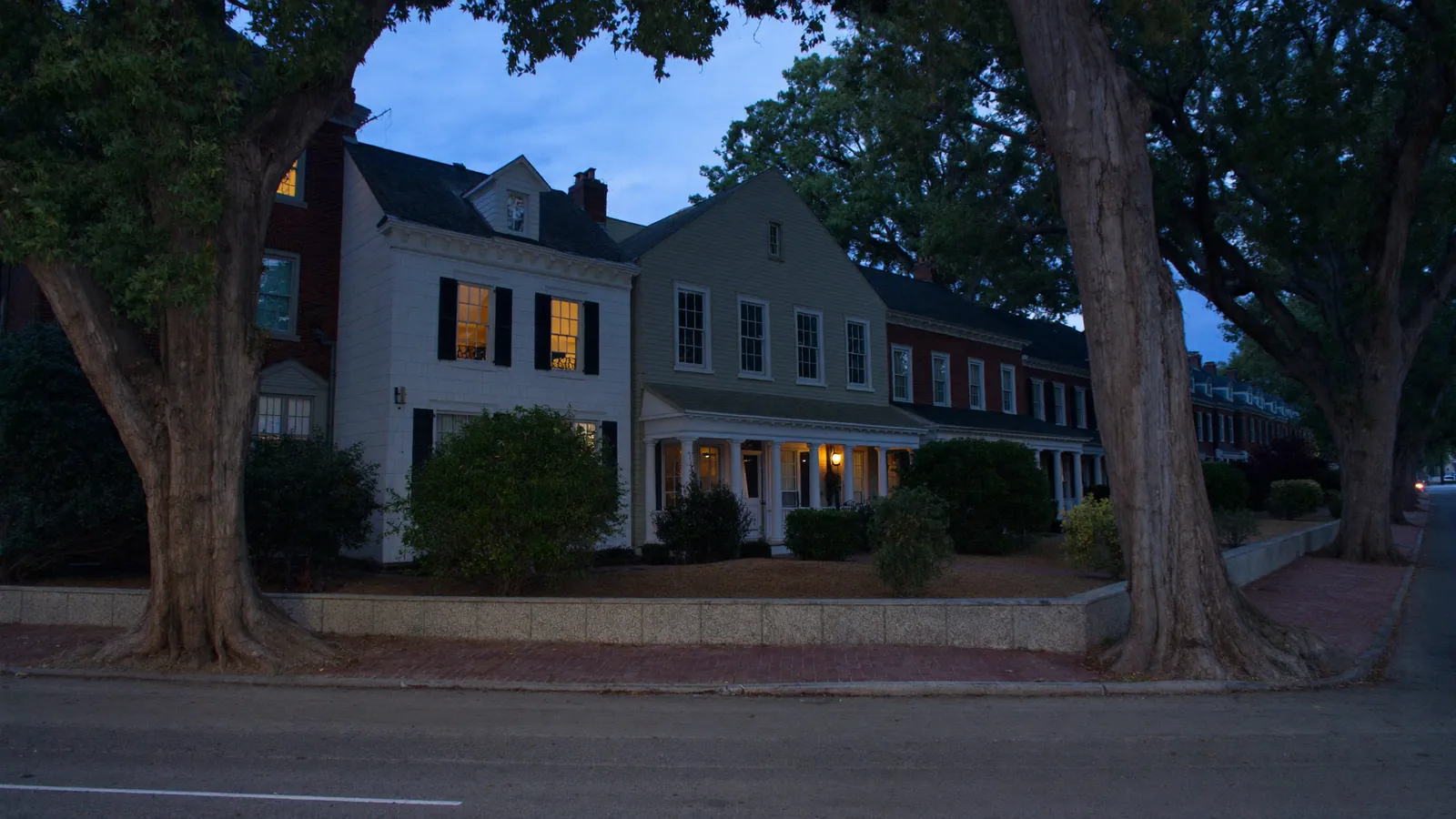
Who reviews an EV charger request on a historic home -- the city or the HOA?
A municipal board reviews it, not a homeowners association, and the two are legally different things. A locally-designated historic district is created by a city or county ordinance, and exterior work visible from a public street or right-of-way inside that district requires a Certificate of Appropriateness from a board the ordinance creates -- commonly called a historic district commission, a board of architectural review, or a landmarks commission depending on the city. That board's authority comes from public law, and its decision can carry the same weight as a building permit denial.
A homeowners association's architectural review committee is a different animal entirely: a private body created by the community's own covenants, reviewing under a private contract you signed when you bought the property. Some historic homes sit inside both a locally-designated historic district and an HOA, and where that overlap exists, both approvals are required, from two authorities applying two different sets of rules. The HOA-side process, including the state right-to-charge statutes that limit what an HOA can refuse, is covered on its own page and does not reach a municipal historic preservation board -- those statutes are written for associations, not for city or county land-use bodies.
Does the federal government's 2022 EV charger exemption cover a private homeowner's historic house?
No, and confirming why matters more than the no. The Advisory Council on Historic Preservation approved an exemption on October 26, 2022 -- published in the Federal Register on November 2, 2022 -- that releases federal agencies from Section 106 review of the National Historic Preservation Act when they install electric vehicle supply equipment meeting stated criteria. Read directly from ACHP's own page in September 2026: Section 106 review, and this exemption from it, applies only to an 'undertaking' involving a federal agency, federal funding, a federal license, or a federal approval. A private homeowner's charger installation with none of those involved was never subject to Section 106 review, exempted or not -- the exemption is simply irrelevant to almost every residential project, historic district or not.
| Criterion | What it requires |
|---|---|
| Vehicle and charging level | Level 1, 2 or DC fast charging for passenger cars and light-duty vehicles |
| Location | Installed in an existing designated parking area or structure |
| Electrical infrastructure | Uses existing electric infrastructure; no new solar canopy or photovoltaic installation required |
| Mounting | Wall-mount, pole-mount or freestanding configuration |
| Impact on historic fabric | Only minimal changes to distinctive materials, features, spaces and landscapes |
| Reversibility | Installed so effects to the historic property are not permanent |
What standards does a historic district board actually apply?
Most local historic-preservation ordinances direct their review boards to the Secretary of the Interior's Standards for Rehabilitation, a set of ten principles published by the National Park Service and read directly from nps.gov in September 2026 -- though the exact wording your board applies is set by your own city's ordinance, not by this federal document itself, and whether a given board treats the Standards as binding or merely advisory varies.
Two of the ten matter most for a charger. Standard 9 requires that new exterior work 'be differentiated from the old' while staying 'compatible with the massing, size, scale, and architectural features' of the property -- in practice, a charger that reads as a modern, discrete accessory rather than something trying to look original. Standard 10 requires that new work be removable 'in the future' without impairing 'the essential form and integrity of the historic property' -- in practice, surface-mounted conduit and screws into non-original substrate rather than anything cut into historic siding or masonry.
Where should the charger go to clear historic review fastest?
A rear or side elevation not visible from the public right-of-way clears review fastest, because most Certificate of Appropriateness ordinances only regulate what a passerby on the street can see -- a charger mounted on a rear wall facing a private yard or alley is frequently outside the board's jurisdiction entirely, though that boundary is set by your specific ordinance, not a rule this page can state for every city.
Where a street-facing location is unavoidable, Standard 9's compatibility test and Standard 10's reversibility test translate into concrete choices: mount the unit low-profile and close to the existing electrical panel to avoid a long visible conduit run, use surface-mounted conduit painted to match the wall rather than conduit cut into the siding, and choose a charger color that reads as neutral against the building rather than a bright manufacturer default. Every one of those choices is reversible, which is the property the board is actually screening for.
What belongs in a historic district EV charger application packet?
A complete packet answers the board's questions before the meeting, the same discipline that works for an HOA request but built for a different reviewer.
| Item | Why the board asks for it |
|---|---|
| Photos of the existing wall or elevation where the unit will mount | Establishes the baseline condition the board is comparing the proposal against |
| A simple site or elevation drawing showing the charger's exact location | Confirms visibility from the public right-of-way, the fact that decides jurisdiction |
| Equipment cut sheet with dimensions and available colors | Answers the low-profile and color-compatibility questions in one page |
| A short description of the mounting method | Demonstrates the installation is reversible under Standard 10 |
| The electrical contractor's license number | Confirms the wiring itself will go through a separate, required permit process |
Does every historic district use the same rules and review timeline?
No, and this is the honest boundary of this page. Certificate of Appropriateness review is created and defined by each city or county's own ordinance, and ordinances differ on what triggers review, whether staff can approve a low-impact item administratively or every request goes to a full board hearing, and how long the process takes. This page describes the framework nearly all of them share -- a municipal board, a visibility test, and the Standards as a common reference point -- and does not claim to describe any specific jurisdiction's ordinance text or timeline, because that was not researched here.
The one question worth asking your commission's staff directly, before submitting anything: whether the ordinance includes a staff-level or expedited review track for lower-impact items like a charger. Some do. Do not assume either way, and do not let an unanswered question default you into a slower process than the one you actually qualify for.
Does a historic district board or my HOA approve an EV charger installation?
Both, if your property is inside both a locally-designated historic district and a homeowners association -- they are separate authorities applying separate rules. The historic board's Certificate of Appropriateness process is public law created by a city or county ordinance. The HOA's architectural review is a private contract you agreed to when you bought the property. Getting one approval does not substitute for the other, and each has its own application.
Can a historic preservation board deny an EV charger request outright?
Generally yes, subject to its own ordinance's standards and procedures. The state right-to-charge statutes that limit what an HOA or condo association can refuse are written for those private associations and do not extend to a municipal historic preservation board's public-law review. A board still has to follow its own ordinance's process and cannot act arbitrarily, but there is no equivalent statutory floor forcing approval the way there sometimes is for an HOA.
Does the 2022 federal EV charger historic preservation exemption help me install a charger at my historic home?
No. That exemption, approved by the Advisory Council on Historic Preservation on October 26, 2022, releases federal agencies from Section 106 review of the National Historic Preservation Act for qualifying EVSE installations. Section 106 review only ever applies to an undertaking involving federal agency action, funding, licensing or approval -- a private homeowner's own charger project, with none of those, was never inside that review process, so the exemption changes nothing for you.
What are the Secretary of the Interior's Standards for Rehabilitation, and do they apply to my project?
The Secretary of the Interior's Standards for Rehabilitation are ten national preservation principles published by the National Park Service, most relevant here being Standard 9 (new work should be differentiated from old and compatible in scale) and Standard 10 (new work should be removable without harming the historic property). Whether your specific board treats them as binding or advisory depends on your local ordinance -- ask your commission's staff which standard, if any, governs your review.
Where should I mount an EV charger on a historic house to get board approval faster?
On a rear or side elevation not visible from the public right-of-way, where most Certificate of Appropriateness ordinances have no jurisdiction at all. If a visible location is unavoidable, mount the unit close to the existing panel to minimize new conduit, use surface-mounted conduit painted to match the wall rather than conduit cut into historic siding, and pick a neutral color -- all reversible choices that answer the board's core questions directly.
Do I still need a separate electrical permit if the historic board approves my charger?
Yes. A Certificate of Appropriateness and an electrical permit are two unrelated approvals from two different offices -- the preservation board reviews appearance, and the building or electrical department reviews the wiring and requires an inspection. Approval from one does not substitute for the other, and your contractor typically pulls the electrical permit as a separate step.
- Advisory Council on Historic Preservation -- About the EVSE Historic Preservation Review Exemption
- US Department of Energy -- Exemption Regarding Historic Preservation Review Process for Undertakings Involving Electric Vehicle Supply Equipment
- US National Park Service -- The Secretary of the Interior's Standards for Rehabilitation
- eCFR -- 36 CFR Part 67, Historic Preservation Certifications Under the Internal Revenue Code (Standards for Rehabilitation at 67.7)
This page describes the general Certificate of Appropriateness framework and the two federal sources that most often get confused with it. It does not survey any specific city's ordinance text, review timeline, or whether that city offers a fast-track 'minor works' review -- those vary commission by commission and are a question for your own historic preservation office, not a fact this national guide can state for you. Nothing here is legal advice.
Boards approve packets, not requests
Tell us the mounting wall, the run distance and what's visible from the street, and you get an installed-price range to attach to your Certificate of Appropriateness application.