How many EV charging ports does a property actually need?
Fewer than the number of electric vehicles on the property. A Level 2 port delivers roughly 7 to 11 kW, so across a ten-hour overnight window it can deliver more energy than several typical days of driving consume. With any access model at all, one port serves multiple vehicles. Count the cars that park for the full dwell window, decide how access is managed, then derive the port count from the energy each car needs and the hours available. Oversize the conduit and the breaker spaces rather than the chargers: adding a port to spare conduit is a day of work, and adding one to a finished lot is a trench.
Updated 2026-08-20
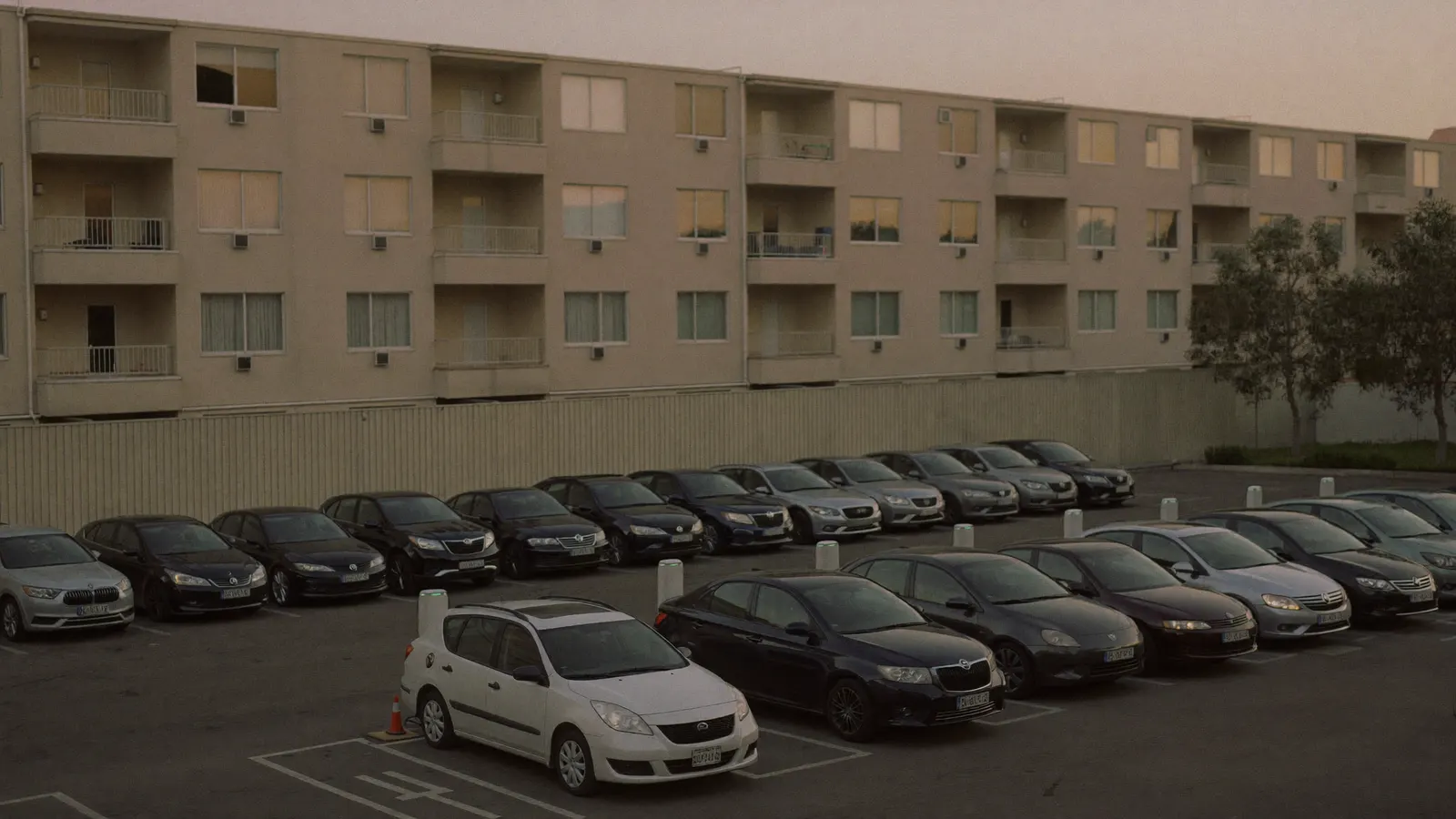
Start with energy, not with vehicles
A port is a rate of delivery, and what a driver needs is a quantity of energy. Once you put those in the same units the ratio stops being mysterious.
| Port output | Minimum circuit | Energy in 4 hours | Energy in 10 hours | Miles in 10 hours |
|---|---|---|---|---|
| 32 A at 208 V — 6.7 kW | 40 A | 27 kWh | 67 kWh | 200 mi |
| 40 A at 208 V — 8.3 kW | 50 A | 33 kWh | 83 kWh | 250 mi |
| 48 A at 208 V — 10.0 kW | 60 A | 40 kWh | 100 kWh | 300 mi |
| 32 A at 240 V — 7.7 kW | 40 A | 31 kWh | 77 kWh | 230 mi |
| 40 A at 240 V — 9.6 kW | 50 A | 38 kWh | 96 kWh | 288 mi |
| 48 A at 240 V — 11.5 kW | 60 A | 46 kWh | 115 kWh | 345 mi |
How many vehicles one port can actually carry
Divide the energy a port can deliver by the energy each vehicle needs and you get the theoretical ceiling. Then cut it, because no access model keeps a port busy every minute.
| Nightly energy per vehicle | Miles that covers | Theoretical ceiling | Planning figure |
|---|---|---|---|
| 10 kWh | 30 mi | 9 vehicles | 4 to 5 |
| 15 kWh | 45 mi | 6 vehicles | 3 |
| 25 kWh | 75 mi | 3 vehicles | 2 |
| 40 kWh | 120 mi | 2 vehicles | 1 to 2 |
| 60 kWh | 180 mi | 1 vehicle | 1 |
The access model is the real multiplier
The same hardware serves twice as many drivers under a managed access model as under first-come parking, so decide the model before you count ports.
The sizing sequence
Work in this order, because every step changes the one after it.
Oversize the things you cannot cheaply add later
The chargers are the easy part to add. Everything they attach to is not.
Where the ratio genuinely breaks
Three situations legitimately push you toward one port per vehicle, and it is worth knowing whether you are in one of them before you argue with a vendor who says you are.
Check your answer after a year
Networked chargers report session data, and that data is the only utilisation figure worth trusting for your property.
How many EV charging stations should an apartment complex have?
There is no national ratio worth quoting. Start from the residents who park overnight and want to charge, assume one Level 2 port covers several of them at ordinary daily mileage, and check the result against your available power. Then build conduit and panel capacity for the full eventual count so the second phase is cheap. Note that new construction in some jurisdictions carries a code-mandated count of EV-capable or EV-ready spaces, which is a separate obligation from what demand suggests.
Is a dual-port charger the same as two ports?
Not always. Many dual-port Level 2 units share one circuit and split the available current between the two connectors when both are in use, so a 48-amp unit delivers roughly half that to each vehicle. That is often fine on an overnight dwell and unacceptable on a short one. Read the specification rather than the port count on the datasheet.
Should we install one port per electric vehicle?
Only where parking is assigned, dwell is short, or every vehicle departs at the same time. Otherwise it buys idle hardware. The energy each car needs overnight is typically a fraction of what a port can deliver in that window, and the difference is what makes sharing work.
How do we plan for more EVs later without overbuilding now?
Separate the infrastructure decision from the hardware decision. Trench, conduit, feeder and panel get sized for the count you expect at full adoption. Chargers get bought when there are drivers for them. The civil work is the part you cannot redo cheaply, and it is also the part with the longest useful life.
What happens if we install too many ports?
You pay for hardware that idles, you pay network subscription on ports nobody uses, and on some tariffs you carry the demand consequence of capacity you never draw. None of it is catastrophic, but it is money that would have bought conduit for the next phase.
Put your port count against a real number
The estimate takes the port count you land on, the surface between the panel and the parking, and the run distance, and returns a modelled range with the civil work broken out separately. It is the fastest way to see whether phase one should be four ports or eight.